Invitation & Access · Long Island: Suffolk & the Hamptons
National Golf Links of AmericaSouthampton
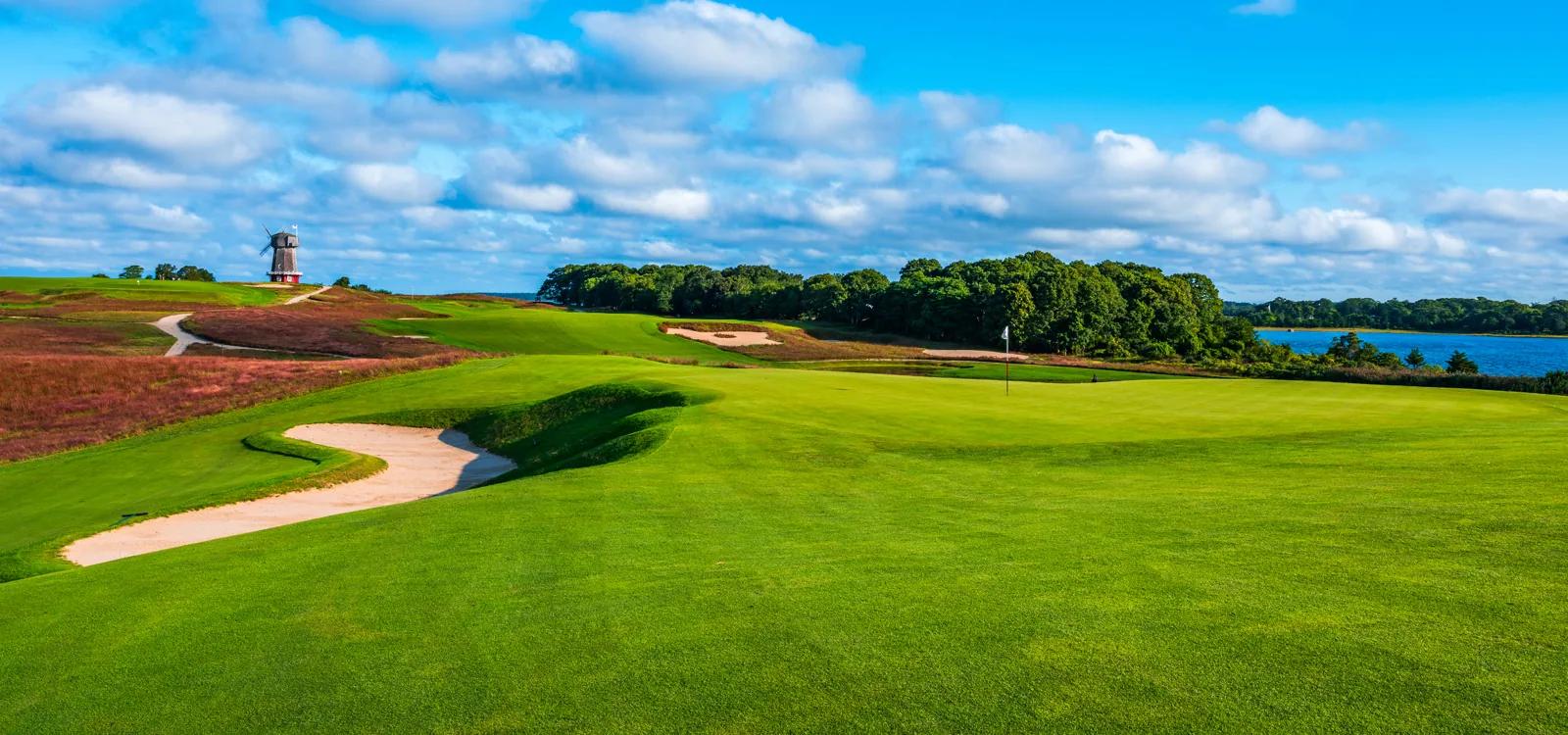
C.B. Macdonald's template-hole links on Peconic Bay in Southampton, built with Seth Raynor.
Par
72
Yardage
6,935
Rating · Slope
73.9 · 140
Holes
18
Green Fee
Members only
The Course
About National Golf Links of America
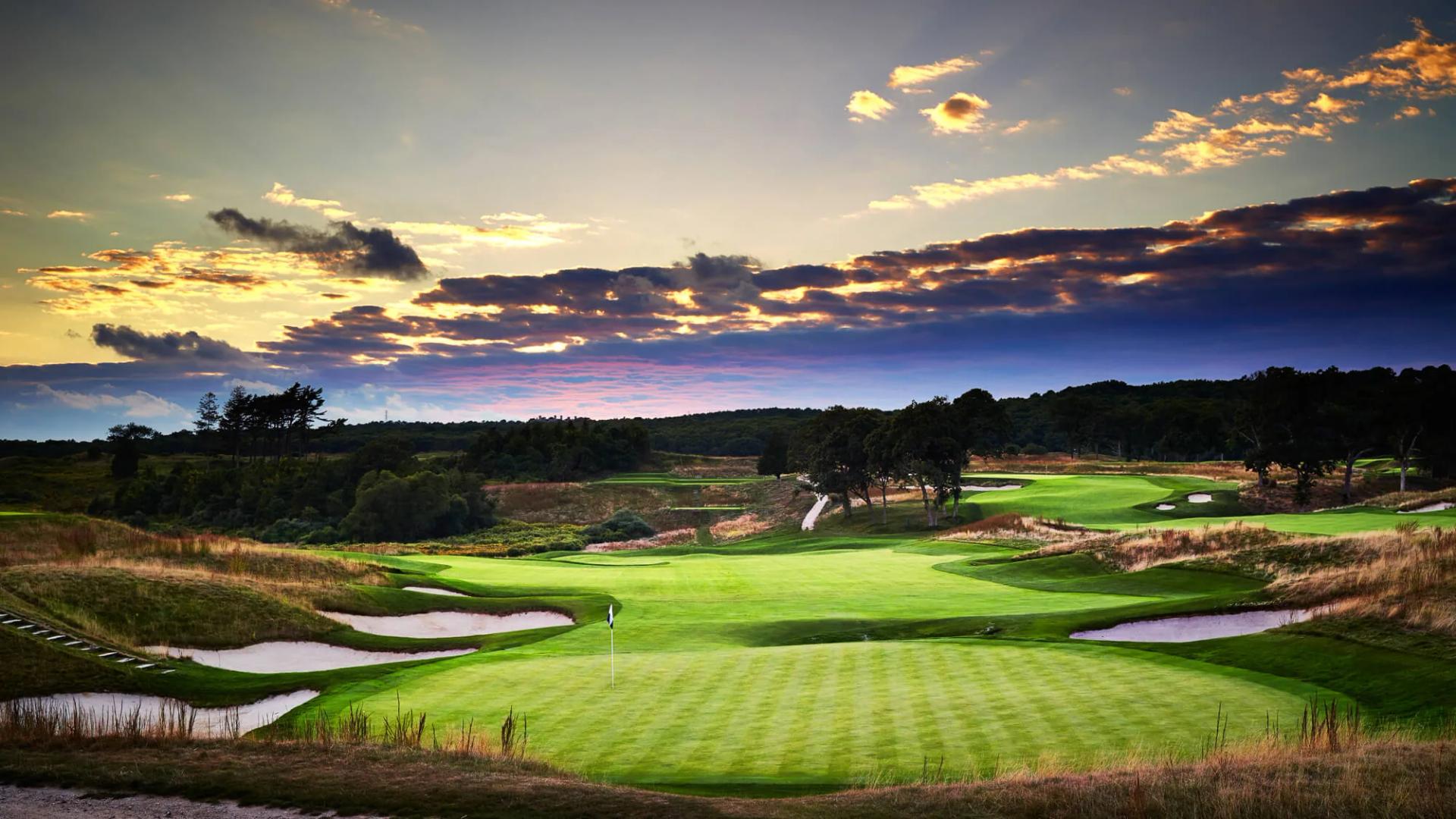
National Golf Links of America is a private club for members and their guests on Sebonac Inlet Road in Southampton, near Shinnecock Hills. The 18-hole course covers 253 acres on Peconic Bay and plays to par 72. It is full of blind shots and hard-to-read slopes, which is why GOLF's advice for anyone playing it is to heed the caddie.
History
National Golf Links of America — History
The club was founded in 1908 under Charles Blair Macdonald, who had studied the great holes of Scotland and England. A Southampton engineer, Seth Raynor, helped build it, beginning one of golf's great design partnerships, and Macdonald completed the course in 1911. It hosted the first Walker Cup in 1922 and the match again in 2013, and is scheduled to host it in 2040. Gil Hanse did restoration work in the 2000s.
Design
National Golf Links of America — Design
Macdonald set out to build a strategic course that offered options rather than a simple penal test, modeling holes on his favorites abroad: the Road and Eden from St Andrews, the Alps from Prestwick, the Redan from North Berwick and the Sahara from Sandwich. Planet Golf describes generous fairways, punishing bunkers with alternate routes around them, and huge greens that are often crowned and severely contoured.
What Sets It Apart
Why Play National Golf Links of America
No. 2 in Golf Digest's 2025-26 New York ranking, National is the course The Fried Egg credits with ushering in the Golden Age of American architecture, its templates spread nationwide through Raynor.
The Round
The Journey at National Golf Links of America
I.
The Opening
The round starts with two 330-yard par 4s, the 2nd a version of the Sahara with a blind tee shot over a hill. The 426-yard 3rd, the No. 1 handicap, is the famous Alps, its approach played over a steep hill to a hidden green. The 195-yard 4th is a Redan on a crest that falls away to the rear, the 478-yard 5th crosses a lumpy hog's back, and the 141-yard 6th is the Short.
II.
The Middle
The 478-yard 7th, a par 5, ends at a Road Hole green complex. After the 400-yard 8th comes the 540-yard 9th, the longest hole on the front nine. The 450-yard 10th climbs to a steeply pitched target, the 432-yard 11th has Principal's Nose bunkers and a double-plateau green, and the 459-yard 12th, the No. 2 handicap, finishes at another steeply pitched green.
III.
The Finish
The 174-yard 13th is the Eden. The 393-yard 14th is a cape hole across water and sand, where biting off more from the tee shortens the approach. After the 417-yard 15th, the 415-yard 16th climbs to a punchbowl green beside the club's windmill. The 375-yard 17th falls toward the water with bunkering that rewards the tighter left side, and the 502-yard 18th runs along the bayside bluffs.
How to Play It
National Golf Links of America — Playing Strategy
Beginner / High Handicap
Take the caddie's advice on every blind shot; GOLF calls the course full of them. The fairways are generous and the greens huge, so play to the wide parts and the center of the green and accept long putts. Use the alternate routes Macdonald left around the bunkers instead of trying to carry them.
Intermediate / Mid Handicap
The greens are often crowned and play smaller than they look, so a ball on the wrong side of a contour can roll off. On the 3rd, carry the diagonal fairway bunker only as far as you comfortably can, and on the 14th, cut off only as much of the hazard as your drive allows. The uphill 16th needs two well-struck shots to reach in regulation.
Advanced / Low Handicap
With a 73.9 rating and 140 slope from 6,935 yards, choosing the route matters more than distance. On the 17th, attacking up the tighter left side opens the green, and on the 18th the bluff-side par 5 lets a good player gain a stroke or give one back. On the 4th Redan, the long angled green falls away at the back, so long is the worst miss.
Signature Holes
National Golf Links of America — Signature Holes
The Card
National Golf Links of America Scorecard
| Hole | 1 | 2 | 3 | 4 | 5 | 6 | 7 | 8 | 9 | Out | 10 | 11 | 12 | 13 | 14 | 15 | 16 | 17 | 18 | In | Total |
|---|---|---|---|---|---|---|---|---|---|---|---|---|---|---|---|---|---|---|---|---|---|
| Par | 4 | 4 | 4 | 3 | 4 | 3 | 5 | 4 | 5 | 36 | 4 | 4 | 4 | 3 | 4 | 4 | 4 | 4 | 5 | 36 | 72 |
| Yards | 330 | 330 | 426 | 195 | 478 | 141 | 478 | 400 | 540 | 3,318 | 450 | 432 | 459 | 174 | 393 | 417 | 415 | 375 | 502 | 3,617 | 6,935 |
| Handicap | 11 | 15 | 1 | 13 | 3 | 17 | 9 | 5 | 7 | — | 4 | 10 | 2 | 18 | 12 | 6 | 14 | 16 | 8 | — | — |
Good to Know
National Golf Links of America — questions answered
- How do I get on National Golf Links of America?
- National Golf Links of America is a private club — play is reserved for members and their guests. The only way on is a membership or a member's invitation; there is no public tee sheet.
- Who designed National Golf Links of America?
- National Golf Links of America was designed by C.B. Macdonald with Seth Raynor.
- What is the par and yardage at National Golf Links of America?
- National Golf Links of America plays to a par of 72 over 6,935 yards from the championship tees, with a course rating of 73.9 and a slope of 140.
- Is National Golf Links of America public or private?
- National Golf Links of America is a private member club — not open to public play. Access is by membership or a member's invitation; there is no public tee sheet.
- Where is National Golf Links of America located?
- National Golf Links of America is located at Sebonac Inlet Road, Southampton, NY 11968, in the Long Island: Suffolk & the Hamptons area of New York.
More in Long Island: Suffolk & the Hamptons
More golf courses in Long Island: Suffolk & the Hamptons
William Flynn · Southampton
Shinnecock Hills Golf Club
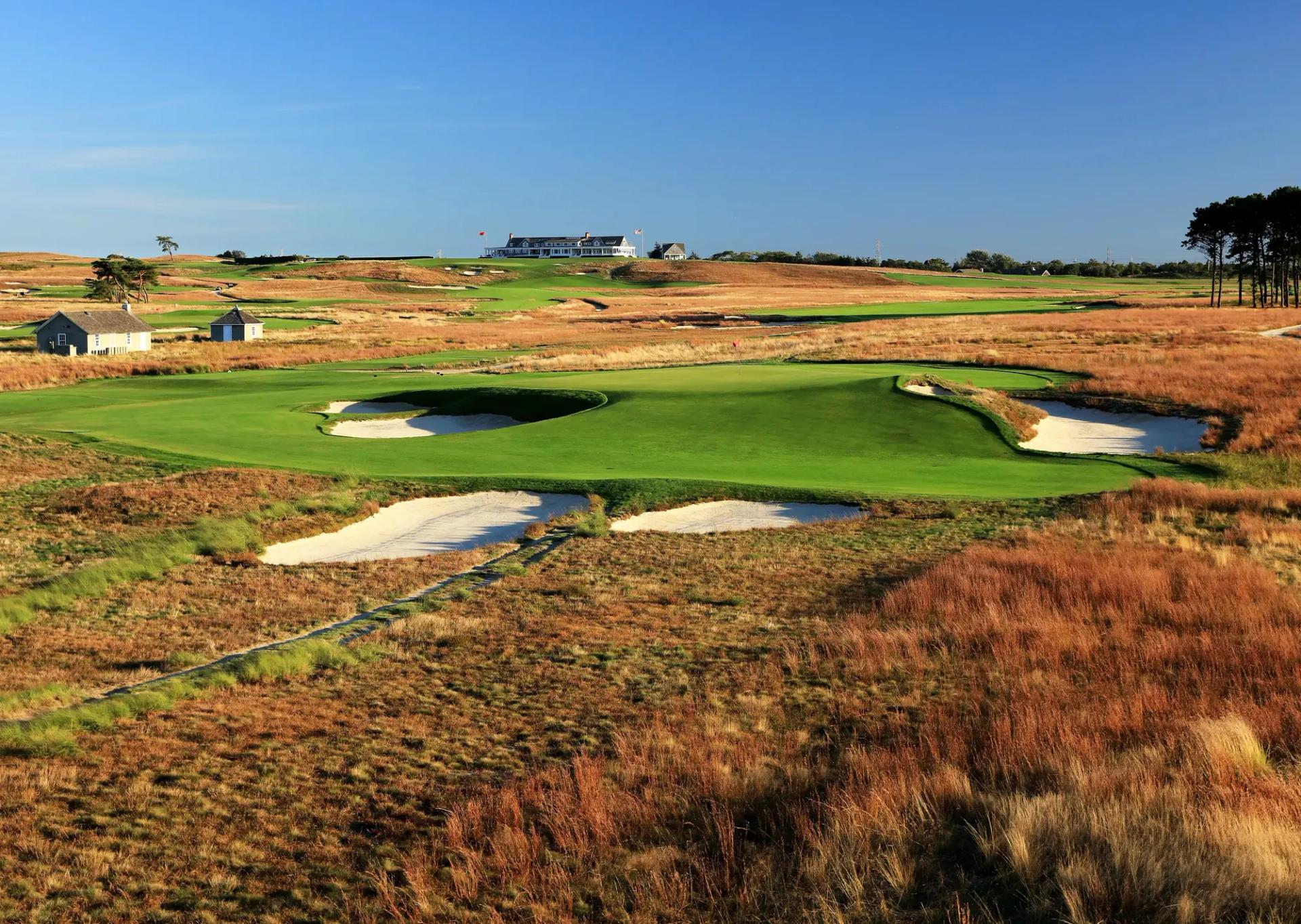
William Flynn's 1931 links-like course on the Shinnecock Hills, a six-time U.S. Open site in Southampton.
Seth Raynor · Southampton
Southampton Golf Club
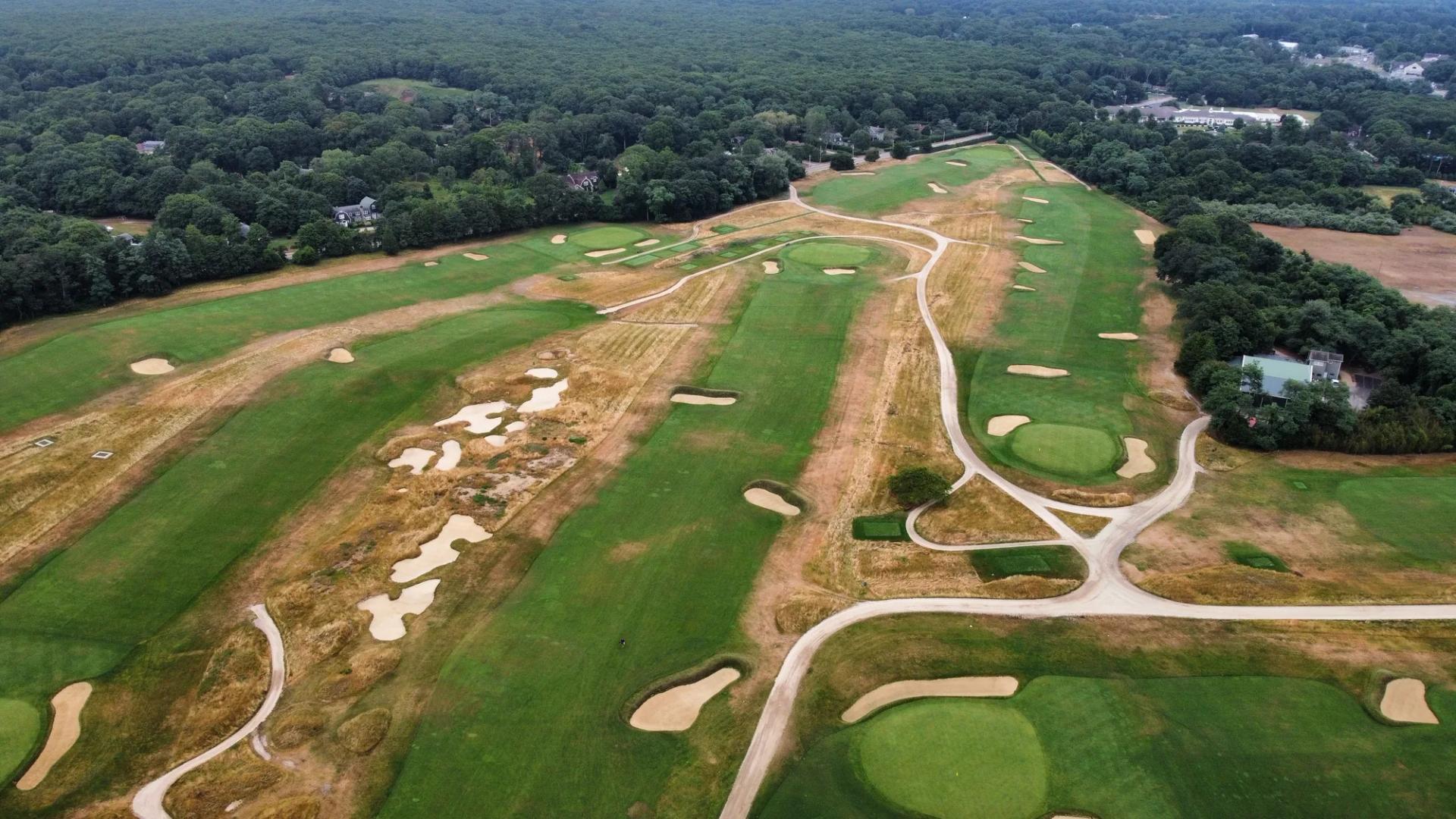
Seth Raynor's 1926 Southampton course, a private club restored to his style by Brian Silva.
Rees Jones · Bridgehampton
Atlantic Golf Club
A 1992 Rees Jones design on a Bridgehampton potato farm, host of two USGA championships.
How to Play It
How to Play National Golf Links of America.
National Golf Links of America is a private club — play is reserved for members and their guests, with no public tee sheet. The only way on is a membership or a member's invitation.
Golf in NY is an independent guide — we don’t sell tee times or mark them up. We map the exact way on.