Invitation & Access · Long Island: Nassau
Nassau Country ClubGlen Cove
Birthplace of the Nassau bet: an 1899 Glen Cove course renovated by Fazio Design in 2021.
Par
70
Yardage
7,128
Rating · Slope
75.1 · 140
Holes
18
Green Fee
Members only
The Course
About Nassau Country Club
Racquets, aquatics and youth programs surround the golf at Nassau Country Club, a private, member-owned club in Glen Cove for members and their guests. The par-70 course stretches to 7,128 yards from the Gold tees and rates 75.1 with a 140 slope. A 2021 Fazio Design renovation reset the bunkers for modern distances and wrapped most greens in tightly mown surrounds, so the short game offers putts, bumps and pitches.
History
Nassau Country Club — History
The club was incorporated in 1896 as the Queens County Golf Club and took the Nassau name in 1898. Its present course began in 1899, laid out by a members' committee led by president Harvey Murdoch. Seth Raynor worked here in 1914-15 and Herbert Strong rebuilt much of it in the early 1920s. Nassau held the 1903 U.S. Amateur and the U.S. Women's Amateur in 1914 and 2014, and in 1923 Bobby Jones acquired his Calamity Jane putter here.
Design
Nassau Country Club — Design
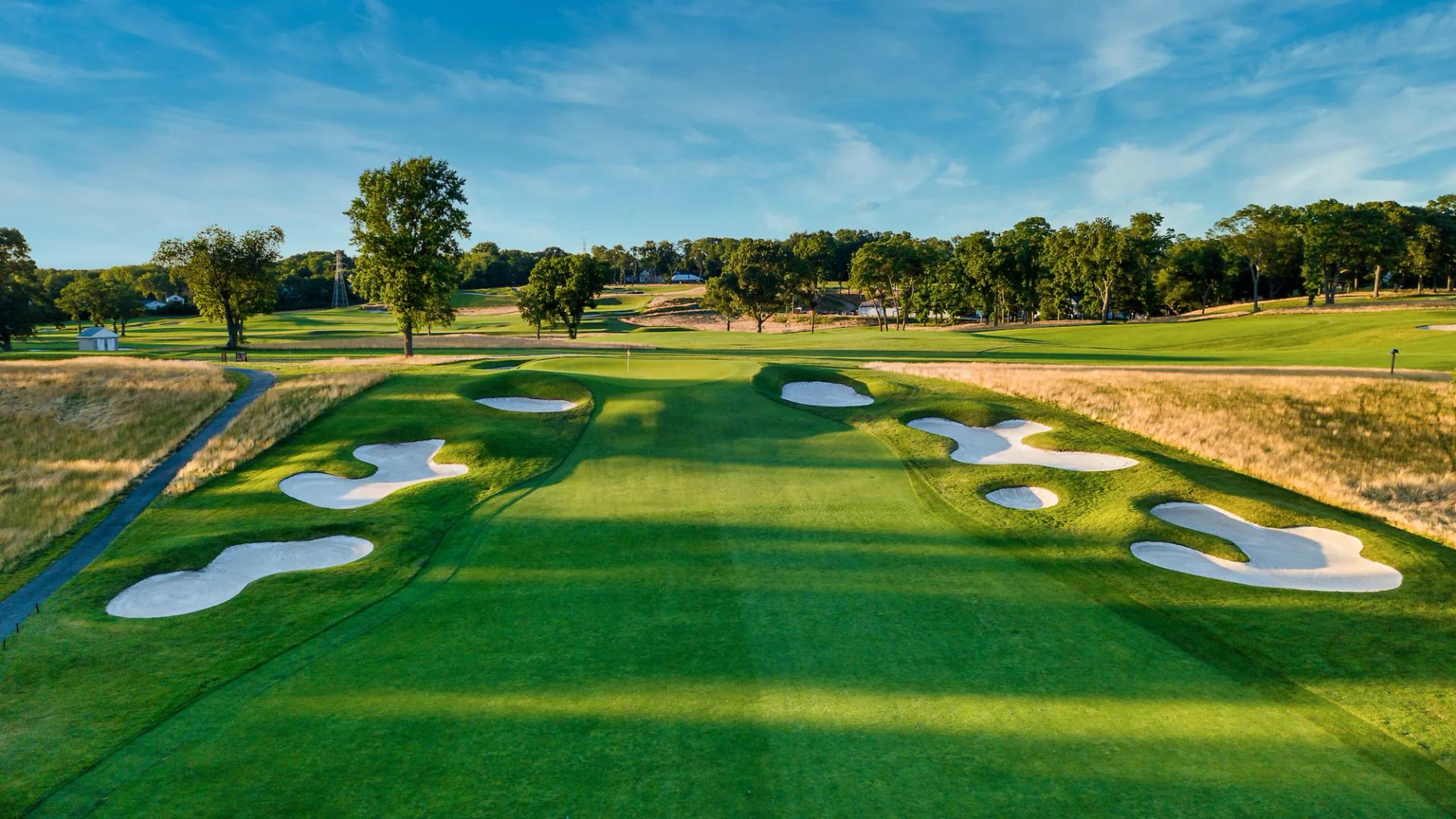
Tom Marzolf of Fazio Design set out to make Nassau a shotmaker's course. The renovation cut the bunkers from 114 to 48, moved them into modern landing zones, sometimes poking into fairways, and built them big and deep with turf shaved to the lip. Low-mown bentgrass surrounds went in on 16 holes. On the 5th and 12th, where Raynor worked, Marzolf used square-edged Raynor bunkers, and the 5th keeps its thumbprint green.
What Sets It Apart
Why Play Nassau Country Club
Nassau gave the game the Nassau bet, devised by member J.B. Coles Tappan to soften lopsided inter-club defeats, and the course is No. 49 in Golf Digest's 2025-26 New York ranking.
The Round
The Journey at Nassau Country Club
I.
The Opening
The 407-yard 1st and 399-yard 2nd ease you in before two holes that Cynthia Dye McGarey made from a pair of par 4s in 2004: the 207-yard par-3 3rd and the 630-yard par-5 4th. Then comes the Raynor-style 5th, 204 yards to a thumbprint green with raised left and right sections around a deep middle and a C-shaped bunker on the left. The 444-yard 6th is the No. 1 handicap.
II.
The Middle
The 455-yard 7th, rated third, and the 425-yard 8th lead to the 316-yard 9th, the shortest par 4, which closes a 3,487-yard front nine. The 203-yard 10th opens the back, and then the card turns severe: the 505-yard 11th is a par 4 and the No. 2 handicap, and the 486-yard 12th, another long par 4, carries Marzolf's square-edged Raynor bunkers.
III.
The Finish
The 467-yard 13th and 385-yard 14th lead to the 614-yard 15th, the second par 5 and the No. 4 handicap. The 179-yard 16th is the shortest hole on the course. The 413-yard 17th precedes the 389-yard 18th, on whose green club professional Jim Maiden handed Bobby Jones a putter he had named Calamity Jane in July 1923, a week before Jones won the U.S. Open at Inwood.
How to Play It
Nassau Country Club — Playing Strategy
Beginner / High Handicap
From 7,128 yards Nassau rates 75.1 with a 140 slope, so choose a forward tee. The renovation made recovery easier for higher handicaps: shaved turf around 16 greens lets you putt or bump the ball from off the green instead of chipping. Take the 630-yard 4th and 614-yard 15th in three comfortable shots.
Intermediate / Mid Handicap
Respect the fairway bunkers, which Marzolf placed in the landing areas and sometimes into the fairway itself: decide on each tee whether to lay back, play to the side or carry them. The 11th and 12th, par 4s of 505 and 486 yards, are bogey holes for most players. On the 5th, find the correct raised section of the thumbprint green rather than the middle hollow.
Advanced / Low Handicap
Marzolf said the tight lies around the greens make chipping harder for good players, who must choose between a putt, a bump into the slope and a flop. Length matters on a par 70 with par 4s of 444 to 505 yards at the 6th, 7th, 11th, 12th and 13th, so the 630-yard 4th and 614-yard 15th are where birdies have to come from.
Signature Holes
Nassau Country Club — Signature Holes
The Card
Nassau Country Club Scorecard
| Hole | 1 | 2 | 3 | 4 | 5 | 6 | 7 | 8 | 9 | Out | 10 | 11 | 12 | 13 | 14 | 15 | 16 | 17 | 18 | In | Total |
|---|---|---|---|---|---|---|---|---|---|---|---|---|---|---|---|---|---|---|---|---|---|
| Par | 4 | 4 | 3 | 5 | 3 | 4 | 4 | 4 | 4 | 35 | 3 | 4 | 4 | 4 | 4 | 5 | 3 | 4 | 4 | 35 | 70 |
| Yards | 407 | 399 | 207 | 630 | 204 | 444 | 455 | 425 | 316 | 3,487 | 203 | 505 | 486 | 467 | 385 | 614 | 179 | 413 | 389 | 3,641 | 7,128 |
| Handicap | 9 | 11 | 13 | 5 | 17 | 1 | 3 | 7 | 15 | — | 16 | 2 | 6 | 8 | 12 | 4 | 18 | 10 | 14 | — | — |
Good to Know
Nassau Country Club — questions answered
- How do I get on Nassau Country Club?
- Nassau Country Club is a private club — play is reserved for members and their guests. The only way on is a membership or a member's invitation; there is no public tee sheet.
- Who designed Nassau Country Club?
- Nassau Country Club was designed by Seth Raynor; redesigned by Herbert Strong and opened in 1899.
- What is the par and yardage at Nassau Country Club?
- Nassau Country Club plays to a par of 70 over 7,128 yards from the championship tees, with a course rating of 75.1 and a slope of 140.
- Is Nassau Country Club public or private?
- Nassau Country Club is a private member club — not open to public play. Access is by membership or a member's invitation; there is no public tee sheet.
- Where is Nassau Country Club located?
- Nassau Country Club is located at 30 St. Andrews Lane, Glen Cove, NY 11542, in the Long Island: Nassau area of New York.
More in Long Island: Nassau
More golf courses in Long Island: Nassau
C.B. Macdonald with Seth Raynor · Locust Valley
The Creek
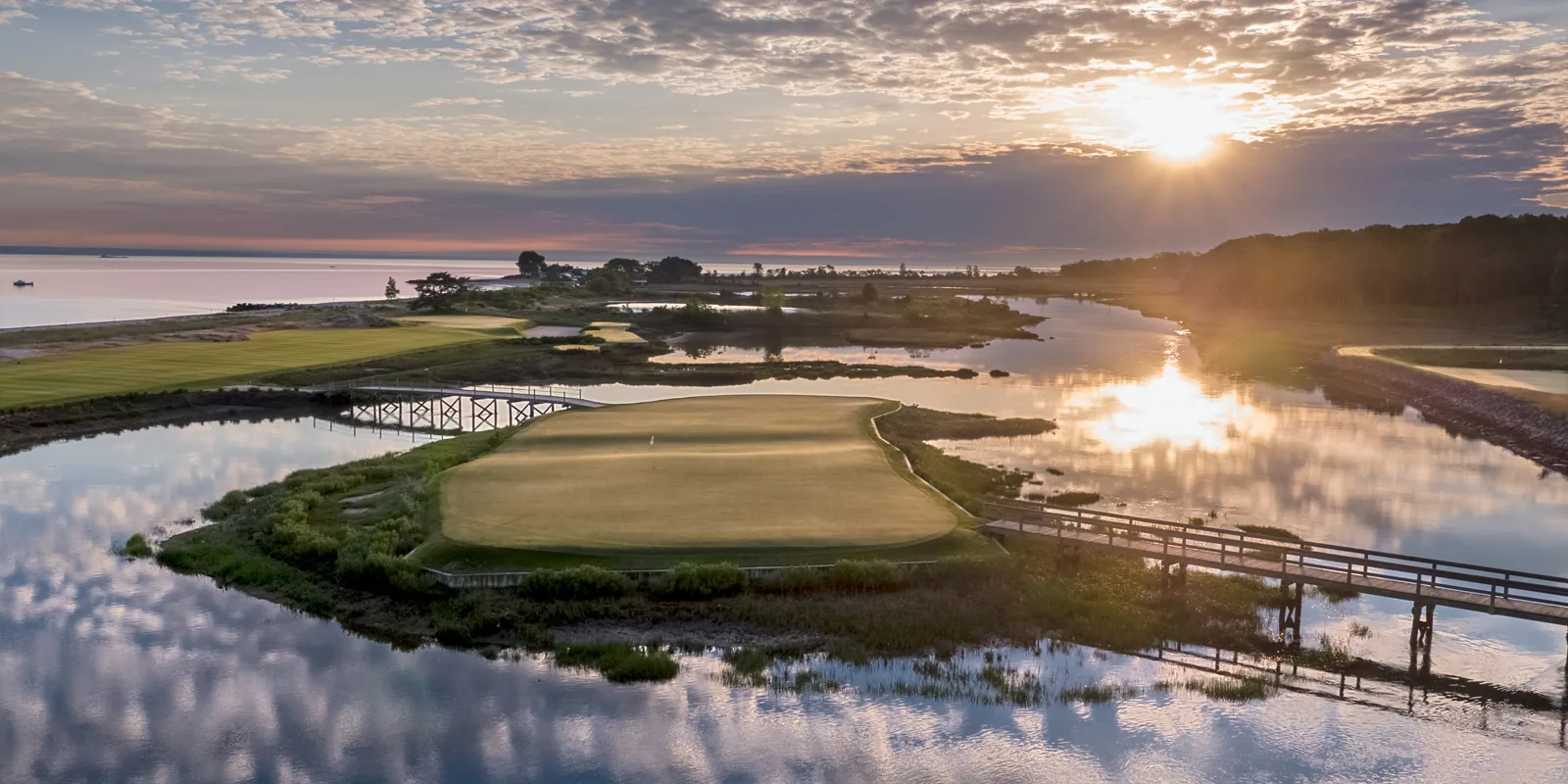
From woodland to Long Island Sound: Macdonald and Raynor's 1923 course in Locust Valley.
C.B. Macdonald with Seth Raynor · Locust Valley
Piping Rock Club
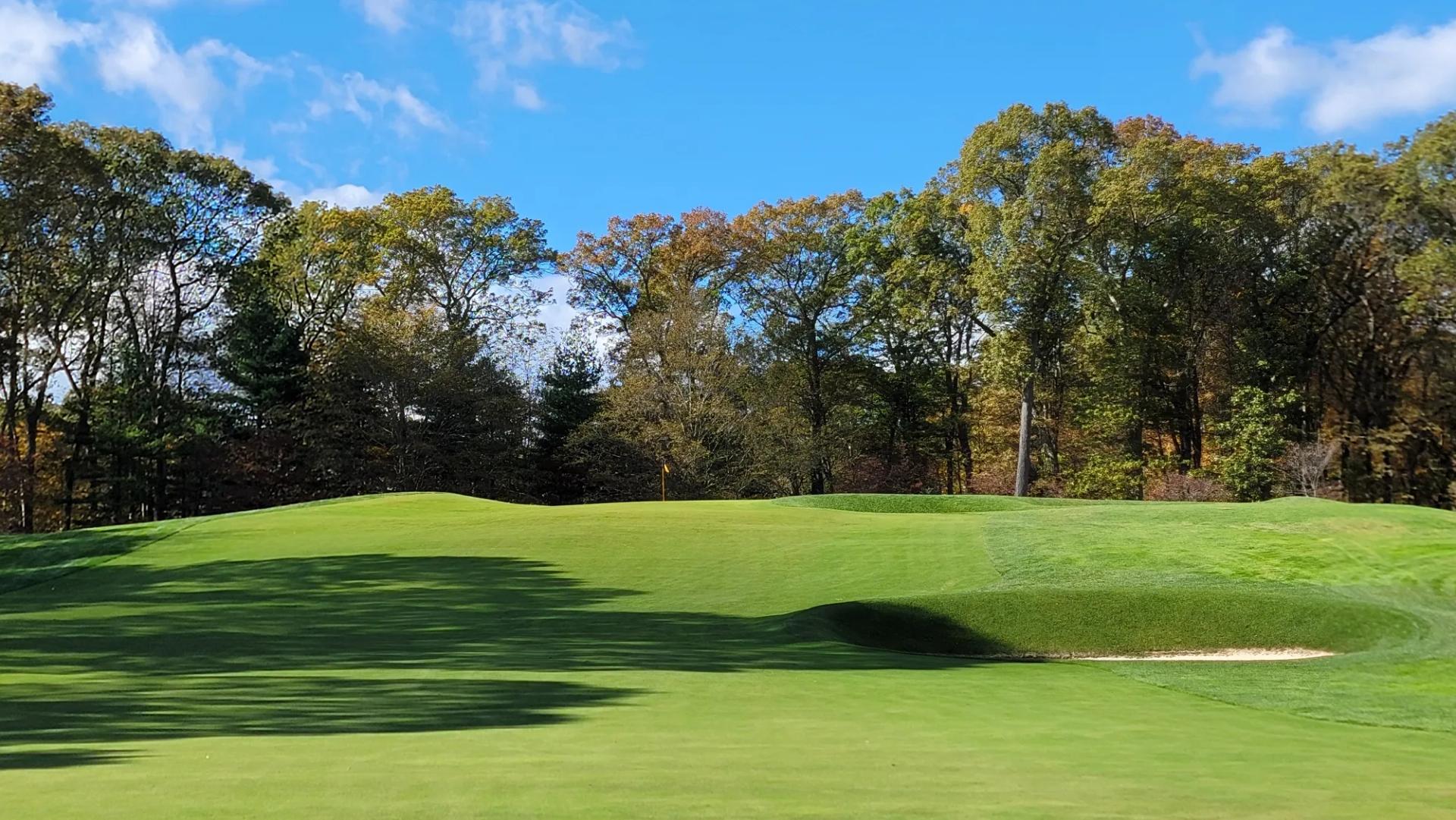
Locust Valley's Macdonald course, built by Seth Raynor around the club's old polo fields.
Herbert Strong · Roslyn Harbor
Engineers Country Club
Herbert Strong's 1917 Roslyn Harbor course, site of the 1919 PGA Championship and 1920 U.S. Amateur.
How to Play It
How to Play Nassau Country Club.
Nassau Country Club is a private club — play is reserved for members and their guests, with no public tee sheet. The only way on is a membership or a member's invitation.
Golf in NY is an independent guide — we don’t sell tee times or mark them up. We map the exact way on.
Make a Day of It
Dining & nightlife around your round.
Pair Nassau Country Club with New York City’s best dining and table service through MyRSVP — our sister guide to New York dining and nightlife.
Explore MyRSVP ↗