Invitation & Access · Westchester
The Apawamis ClubRye
An 1899 Rye course, short on the card and stern around its small, quick greens.
Par
72
Yardage
6,703
Rating · Slope
73.4 · 147
Holes
18
Green Fee
Members only
The Course
About The Apawamis Club
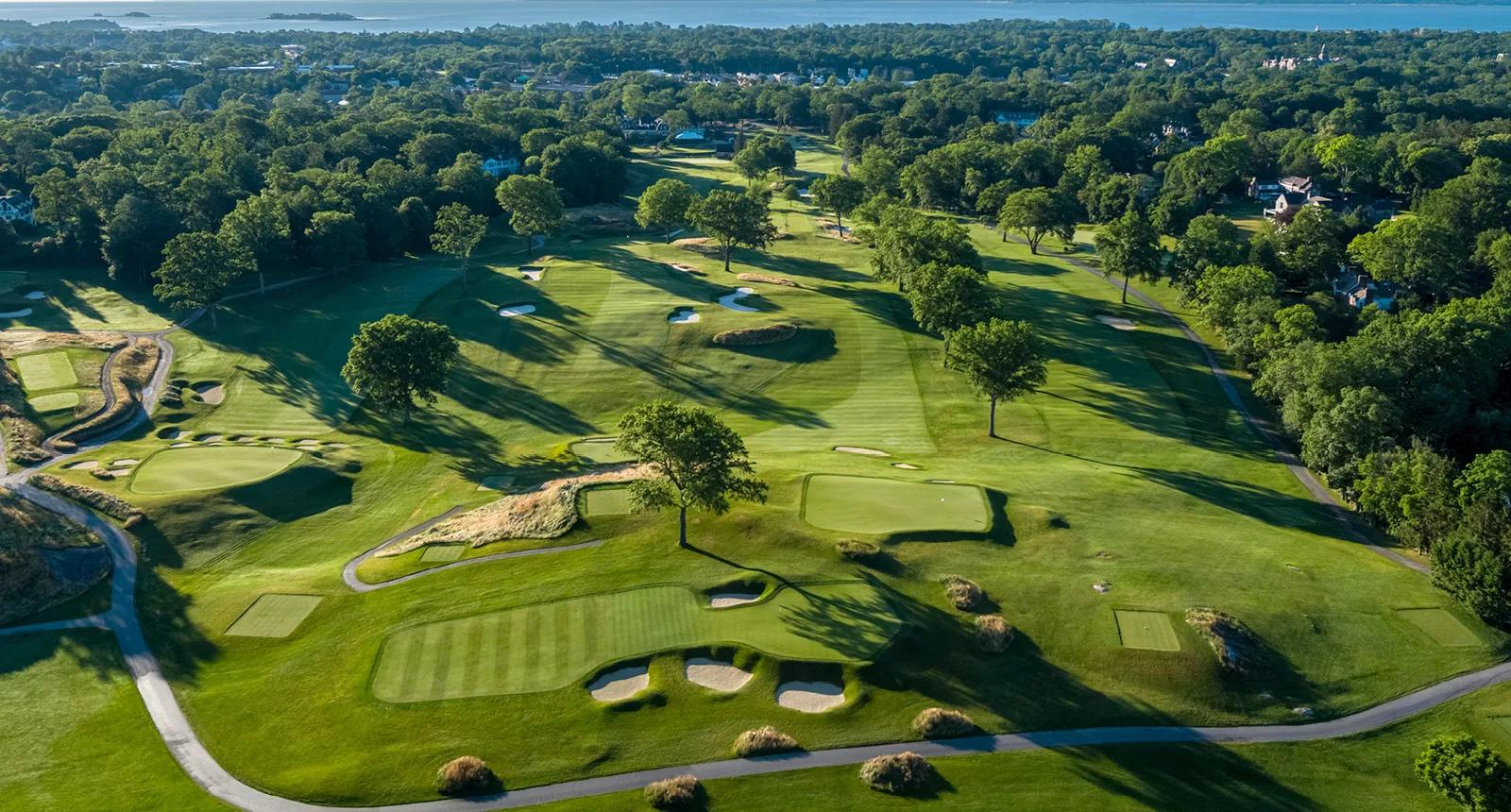
A family club in Rye with squash, tennis and swimming beside its 18 holes, The Apawamis Club is a private club for members and their guests. The course is modest in length, 6,703 yards from the Red tees, but the club stresses accuracy off the tee over rugged Westchester ground and greens that are small, fast and best approached from below the hole. It suits a golfer who values precision over power.
History
The Apawamis Club — History
Apawamis dates to 1890, and its first two nine-hole courses sat on leased land. In 1899 the club bought part of the Charles Park estate, where Golf Committee chairman Maturin Ballou laid out 18 holes with Willie Dunn Jr. The course hosted the 1911 U.S. Amateur and the 1978 Curtis Cup. Herbert Strong, Donald Ross, George and Tom Fazio, Gil Hanse, Tom Marzolf and Keith Foster have all worked on it since.
Design
The Apawamis Club — Design
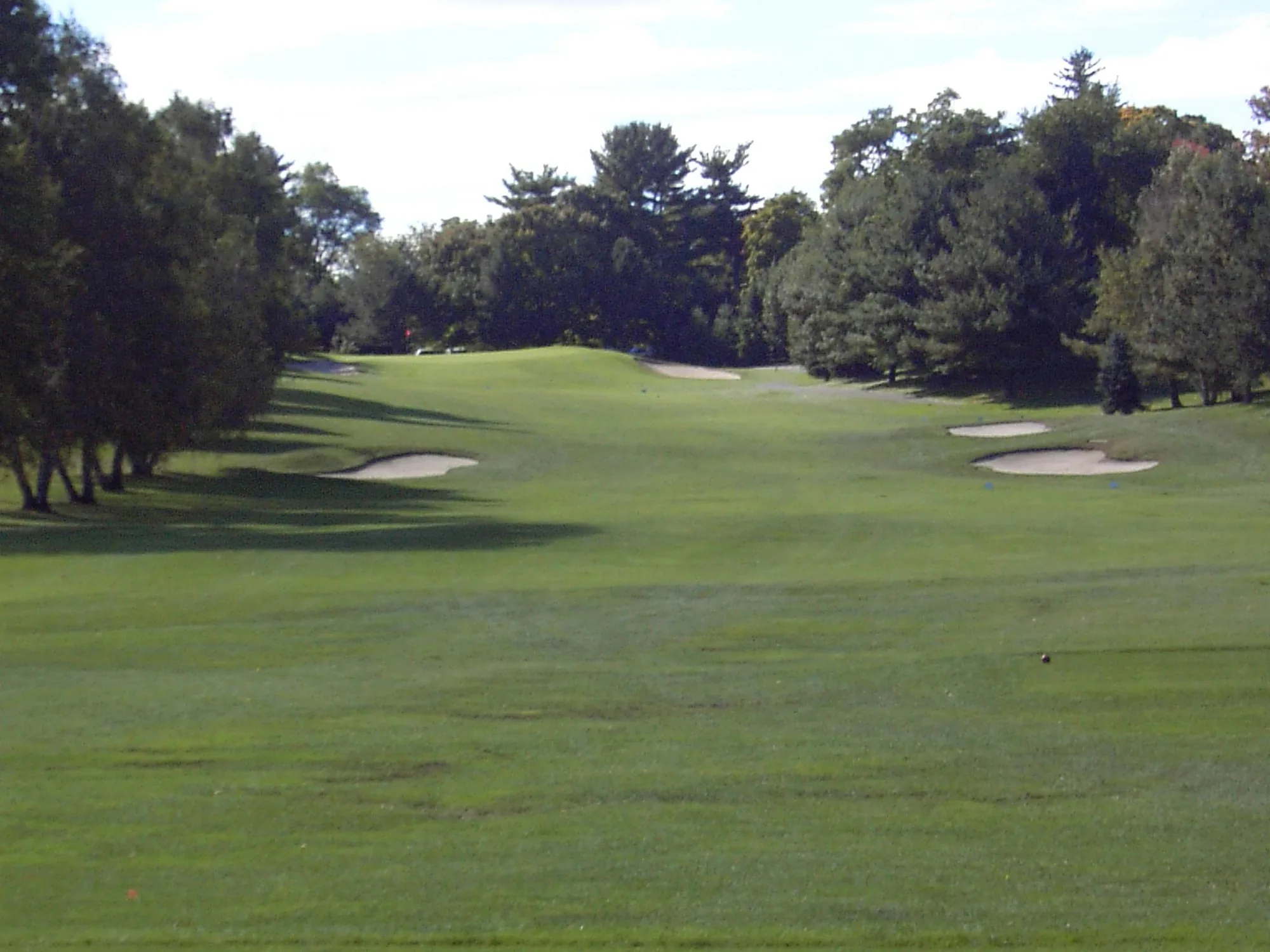
The routing has changed little since 1899, according to a former superintendent's history for the club, but decades of tree planting shrank the fairways from more than 30 acres to under 20. Work guided by Keith Foster from 2017 to 2022 set out to return the course to its original form. The defense is the greens: small, fast and sloped, they call for approaches to specific spots below the hole, and the 4th is still guarded by the bunkers called Eleanor's Teeth.
What Sets It Apart
Why Play The Apawamis Club
At 6,703 yards the card looks modest, yet the Red tees carry a 147 slope, and the club notes that Ben Hogan once called Apawamis the toughest short course he had played.
The Round
The Journey at The Apawamis Club
I.
The Opening
The 381-yard 1st wants a drive to the left-center and an approach that plays a club uphill to a green sloping from back to front. The 2nd has two greens, the left one a wide, two-tiered target up the hill, and the 3rd ends at a punch-bowl green. At the signature 4th, 334 yards, the approach must clear the 14 bunkers called Eleanor's Teeth to a four-tiered green. The 155-yard 5th is the shortest hole, and the 6th is narrow.
II.
The Middle
The 408-yard 7th is the No. 1 handicap: a drive right of the mound on the left opens a narrow gap through the trees, and the green runs away from the approach. The 8th's green tilts toward the front and left, so short beats long. Back-to-back par 5s follow, the 600-yard 9th with a creek and out-of-bounds right and the 527-yard 10th, reachable for long hitters. The 200-yard 12th climbs to an elevated green.
III.
The Finish
Three fairway bunkers frame the 13th, whose sharply sloped green brings water into play for front hole locations. The 480-yard 14th, a par 4 and the No. 2 handicap, asks for a long approach over a valley and brook. The 15th's green has the deepest bunker on the course on its left, and at the 186-yard 16th the miss to favor is short. The 520-yard 17th tempts long hitters past a cross bunker, and the 323-yard 18th starts with a blind drive.
How to Play It
The Apawamis Club — Playing Strategy
Beginner / High Handicap
Aim for the middle of each green and leave the ball below the hole, advice the club repeats on hole after hole. On the 4th, the club says placement matters more than length, so a shorter club to the fairway is fine. At the 16th, try the line a former club professional favored: short and left of the green, leaving a simple chip.
Intermediate / Mid Handicap
A 73.4 rating against a 147 slope says the strokes are lost around the greens, not to length. Respect the out-of-bounds down the right on the 9th and 10th, take at least one extra club to the uphill 12th, and drive to the left-center on the 15th for the best angle to a green with a deep bunker left.
Advanced / Low Handicap
The 10th and 17th are reachable in two, but at the 17th decide early whether to carry the cross bunker about 120 yards out and run the ball down the hill. Par is a good score on the 7th and 14th, the two hardest holes on the card. On the 18th, the club advises a carry of 210 to 225 yards to stay short of the left-side bunkers.
Signature Holes
The Apawamis Club — Signature Holes
The Card
The Apawamis Club Scorecard
| Hole | 1 | 2 | 3 | 4 | 5 | 6 | 7 | 8 | 9 | Out | 10 | 11 | 12 | 13 | 14 | 15 | 16 | 17 | 18 | In | Total |
|---|---|---|---|---|---|---|---|---|---|---|---|---|---|---|---|---|---|---|---|---|---|
| Par | 4 | 4 | 4 | 4 | 3 | 4 | 4 | 4 | 5 | 36 | 5 | 4 | 3 | 4 | 4 | 4 | 3 | 5 | 4 | 36 | 72 |
| Yards | 381 | 349 | 350 | 334 | 155 | 372 | 408 | 361 | 600 | 3,310 | 527 | 374 | 200 | 370 | 480 | 413 | 186 | 520 | 323 | 3,393 | 6,703 |
| Handicap | 5 | 9 | 11 | 7 | 17 | 13 | 1 | 15 | 3 | — | 6 | 12 | 14 | 10 | 2 | 4 | 16 | 8 | 18 | — | — |
Good to Know
The Apawamis Club — questions answered
- How do I get on The Apawamis Club?
- The Apawamis Club is a private club — play is reserved for members and their guests. The only way on is a membership or a member's invitation; there is no public tee sheet.
- Who designed The Apawamis Club?
- The Apawamis Club was designed by Maturin Ballou with Willie Dunn Jr. and opened in 1899.
- What is the par and yardage at The Apawamis Club?
- The Apawamis Club plays to a par of 72 over 6,703 yards from the championship tees, with a course rating of 73.4 and a slope of 147.
- Is The Apawamis Club public or private?
- The Apawamis Club is a private member club — not open to public play. Access is by membership or a member's invitation; there is no public tee sheet.
- Where is The Apawamis Club located?
- The Apawamis Club is located at 2 Club Road, Rye, NY 10580, in the Westchester area of New York.
More in Westchester
More golf courses in Westchester
Walter J. Travis · Rye
Westchester Country Club — West Course
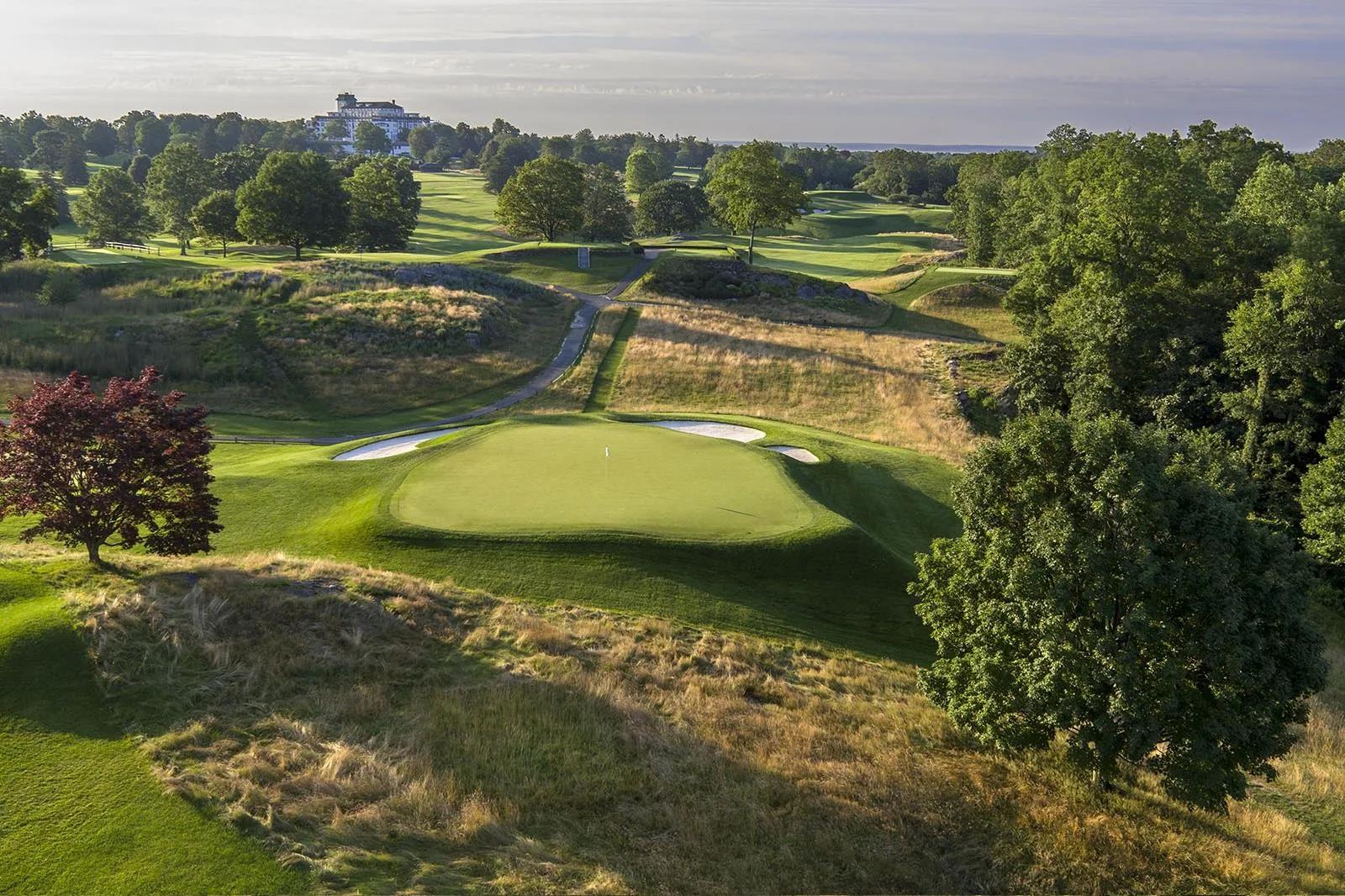
Walter Travis's hilly, wooded 1922 West Course, a PGA Tour venue for decades.
Walter J. Travis · Rye
Westchester Country Club — South Course
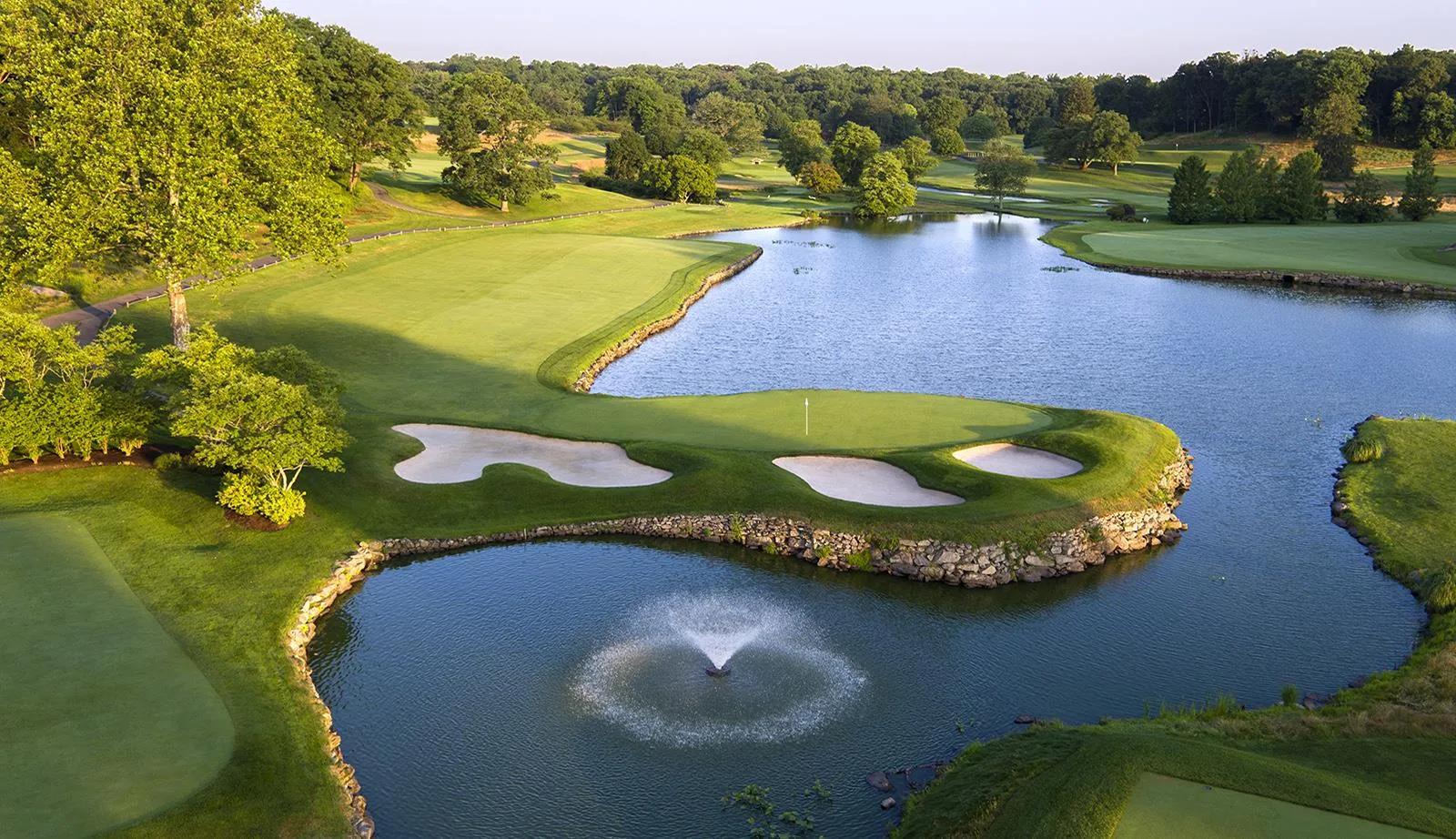
Westchester Country Club's second Travis 18 in Rye, known for its five par 3s.
Tom Winton · White Plains
Maple Moor Golf Course
Tom Winton's 18 holes on the old Griffen farm in White Plains, a Westchester County course.
How to Play It
How to Play The Apawamis Club.
The Apawamis Club is a private club — play is reserved for members and their guests, with no public tee sheet. The only way on is a membership or a member's invitation.
Golf in NY is an independent guide — we don’t sell tee times or mark them up. We map the exact way on.
Make a Day of It
Dining & nightlife around your round.
Pair The Apawamis Club with New York City’s best dining and table service through MyRSVP — our sister guide to New York dining and nightlife.
Explore MyRSVP ↗