Invitation & Access · Finger Lakes & Rochester
Locust Hill Country ClubPittsford
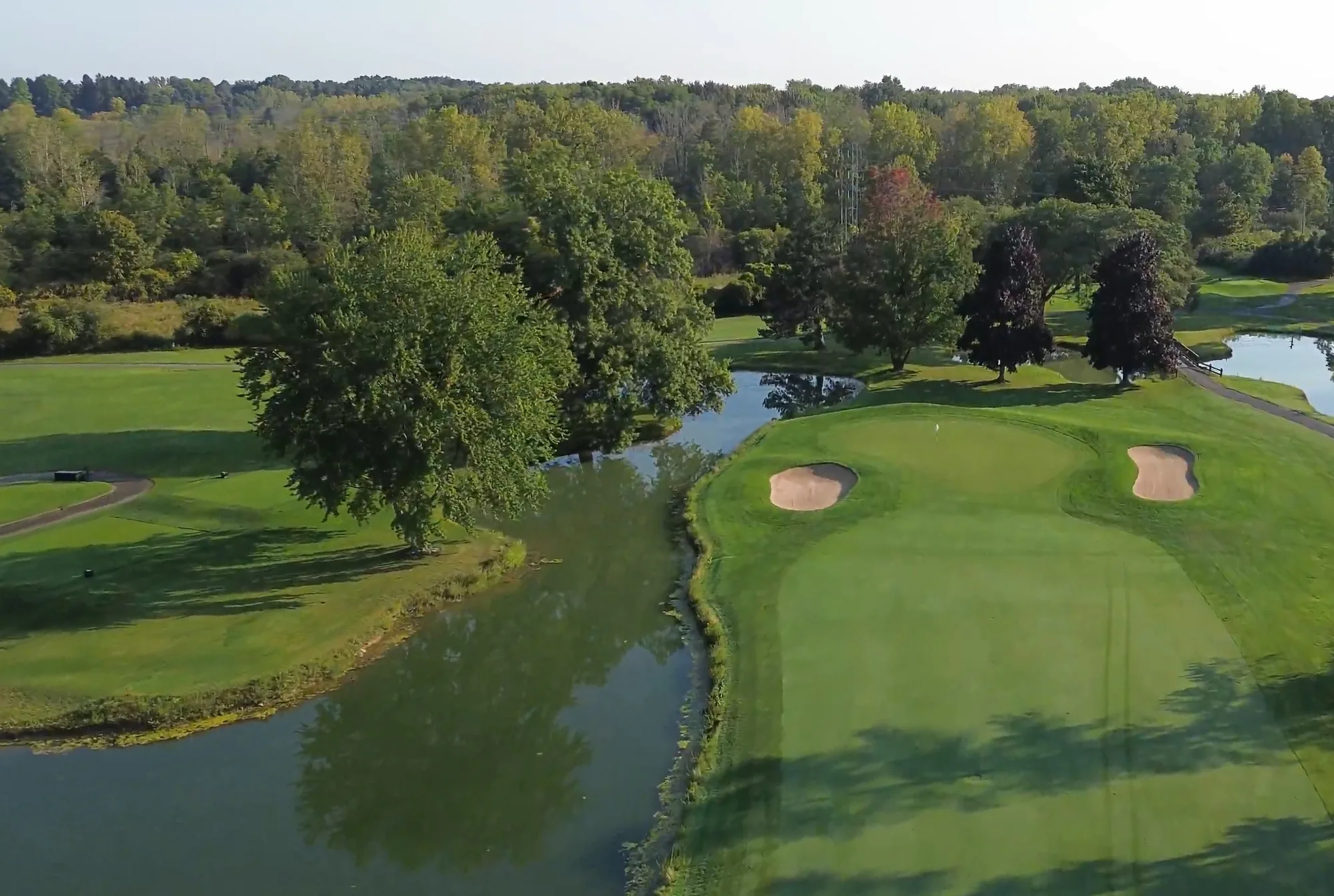
Seymour Dunn's 18 in Pittsford, the longtime home of the LPGA's Rochester event.
Par
72
Yardage
6,677
Rating · Slope
73.5 · 142
Holes
18
Green Fee
Members only
The Course
About Locust Hill Country Club
Locust Hill is a private club for members and their guests on Jefferson Road in Pittsford, southeast of Rochester. Its Seymour Dunn course plays 6,677 yards from the Green tees at par 72, with a 73.5 rating and 142 slope, and the club describes narrow fairways and challenging greens. Each hole carries a name in the Scottish tradition, from Tough Start at the 1st to All Dunn at the 18th.
History
Locust Hill Country Club — History
Founded in 1925 on the former Locust Hill Farm, the club opened with nine holes. In 1927 it bought 52 more acres and hired the Scottish architect Seymour Dunn to expand to 18. A 1966 charity pro-am brought Arnold Palmer and Jack Nicklaus to the course. The LPGA's Rochester event was held here from 1977, and from 2010 the club hosted the LPGA Championship for four years.
Design
Locust Hill Country Club — Design
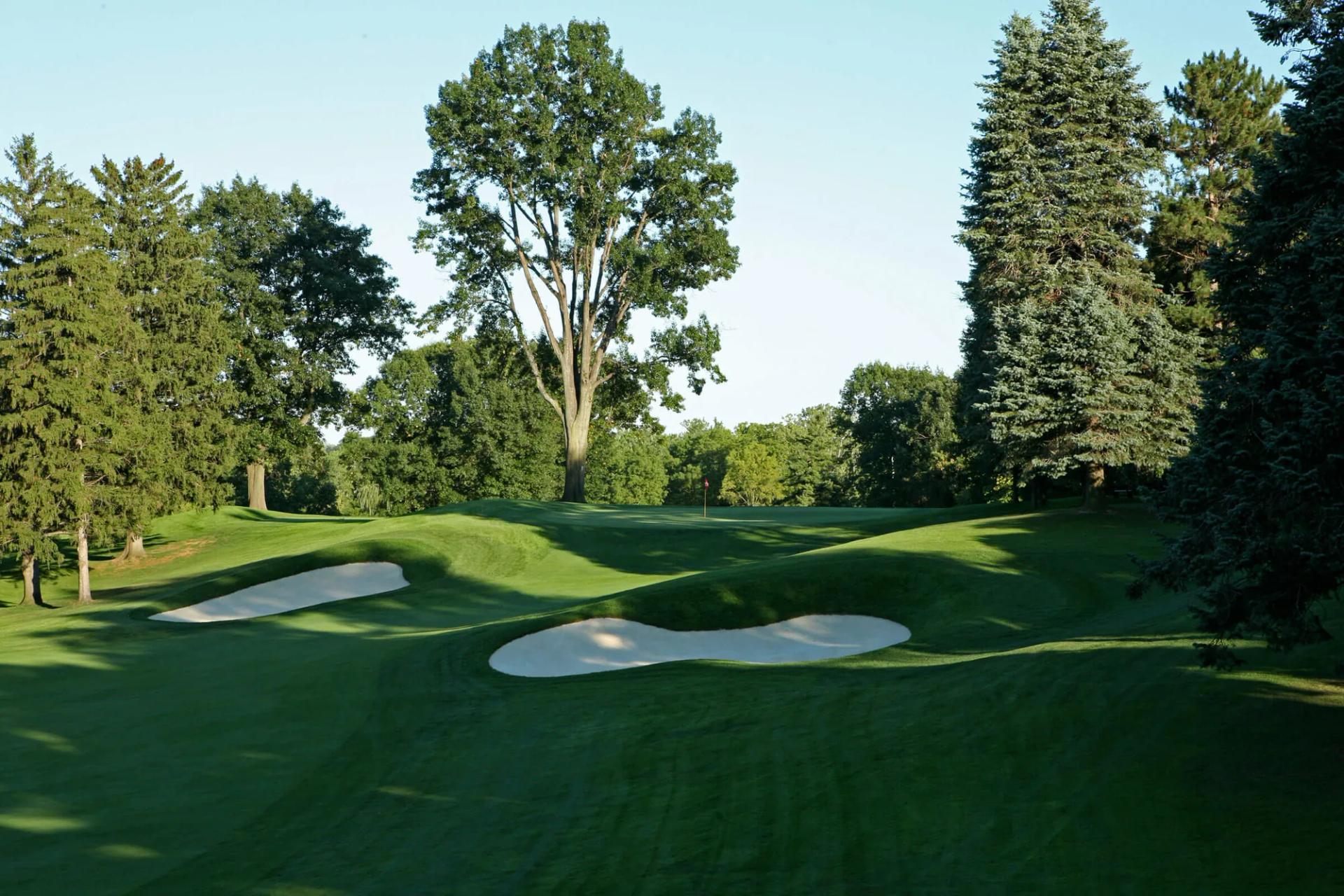
Dunn's routing uses rolling ground: the 6th plays downhill off the tee, the 5th climbs uphill, usually into the wind, and the 8th has a blind uphill second. Two-tier greens recur on the 2nd, 10th, 13th and 18th. Ponds come early and a creek runs through the back nine, crossing the 11th and 13th and running along the 15th. Tree removal since the LPGA years has opened up the views.
What Sets It Apart
Why Play Locust Hill Country Club
Locust Hill held an LPGA Tour stop for more than three decades, including four LPGA Championships from 2010, and the club named its 18th All Dunn to dismiss a theory that Robert Trent Jones had a hand in the design.
The Round
The Journey at Locust Hill Country Club
I.
The Opening
Tough Start fits: the 453-yard 1st, a slight dogleg left with water left and sand on both sides of a small green, is the No. 3 handicap. The 337-yard 2nd has two ponds and a two-tier green. The 372-yard 3rd bends past a large tree right. The 507-yard 4th has a pond left off the tee. The 155-yard 5th plays uphill, and the 447-yard 6th, the No. 1 handicap, plays downhill off the tee.
II.
The Middle
The 203-yard 7th is the longest par 3, with a well-bunkered green. The 453-yard 8th, the shortest par 5, has a blind uphill second, and the 174-yard 9th has out of bounds right. The 445-yard 10th, the No. 4 handicap, is narrow with a two-tier green. A creek bisects the 572-yard 11th, the longest hole, and the 357-yard 12th has a green sloping toward the clubhouse.
III.
The Finish
The 411-yard 13th, the No. 2 handicap, has a creek crossing the fairway and a well-bunkered two-tier green. The 388-yard 14th needs an accurate approach to a saucer-shaped green. A creek runs right of the 142-yard 15th, and the 349-yard 16th has a bunker-ringed green. The 529-yard 17th bends moderately to a green guarded by chocolate-drop mounds, and the 383-yard 18th asks for a precise second.
How to Play It
Locust Hill Country Club — Playing Strategy
Beginner / High Handicap
With a 142 slope from the Green tees, Locust Hill rewards a forward set. Keep the ball right of the water on the 1st and away from the pond on the 4th, and do not chase the 4th in two; the club calls it unreachable. On the 5th, play short and right, which the club calls the best miss.
Intermediate / Mid Handicap
Stay below the hole on the 7th and find the correct tier on the 2nd, 10th, 13th and 18th, where a putt from the wrong level costs strokes. On the 8th, the club suggests aiming the blind second at the center blue spruce. The 13th rewards a drive that carries the creek, and shorter hitters should lay back.
Advanced / Low Handicap
The par-37 back nine holds the scoring and the danger: the 11th's creek should not trouble long, straight hitters, and the 17th's moderate dogleg offers eagle chances, while the 10th and 13th are the back nine's hardest holes. On the 18th, start the drive left and let the slope bring it back, leaving the preferred angle from the right.
Signature Holes
Locust Hill Country Club — Signature Holes
The Card
Locust Hill Country Club Scorecard
| Hole | 1 | 2 | 3 | 4 | 5 | 6 | 7 | 8 | 9 | Out | 10 | 11 | 12 | 13 | 14 | 15 | 16 | 17 | 18 | In | Total |
|---|---|---|---|---|---|---|---|---|---|---|---|---|---|---|---|---|---|---|---|---|---|
| Par | 4 | 4 | 4 | 5 | 3 | 4 | 3 | 5 | 3 | 35 | 4 | 5 | 4 | 4 | 4 | 3 | 4 | 5 | 4 | 37 | 72 |
| Yards | 453 | 337 | 372 | 507 | 155 | 447 | 203 | 453 | 174 | 3,101 | 445 | 572 | 357 | 411 | 388 | 142 | 349 | 529 | 383 | 3,576 | 6,677 |
| Handicap | 3 | 11 | 9 | 7 | 13 | 1 | 5 | 17 | 15 | — | 4 | 14 | 10 | 2 | 8 | 18 | 12 | 16 | 6 | — | — |
Good to Know
Locust Hill Country Club — questions answered
- How do I get on Locust Hill Country Club?
- Locust Hill Country Club is a private club — play is reserved for members and their guests. The only way on is a membership or a member's invitation; there is no public tee sheet.
- Who designed Locust Hill Country Club?
- Locust Hill Country Club was designed by Seymour Dunn.
- What is the par and yardage at Locust Hill Country Club?
- Locust Hill Country Club plays to a par of 72 over 6,677 yards from the championship tees, with a course rating of 73.5 and a slope of 142.
- Is Locust Hill Country Club public or private?
- Locust Hill Country Club is a private member club — not open to public play. Access is by membership or a member's invitation; there is no public tee sheet.
- Where is Locust Hill Country Club located?
- Locust Hill Country Club is located at 2000 Jefferson Road, Pittsford, NY 14534, in the Finger Lakes & Rochester area of New York.
More in Finger Lakes & Rochester
More golf courses in Finger Lakes & Rochester
Donald Ross · Rochester
Irondequoit Country Club
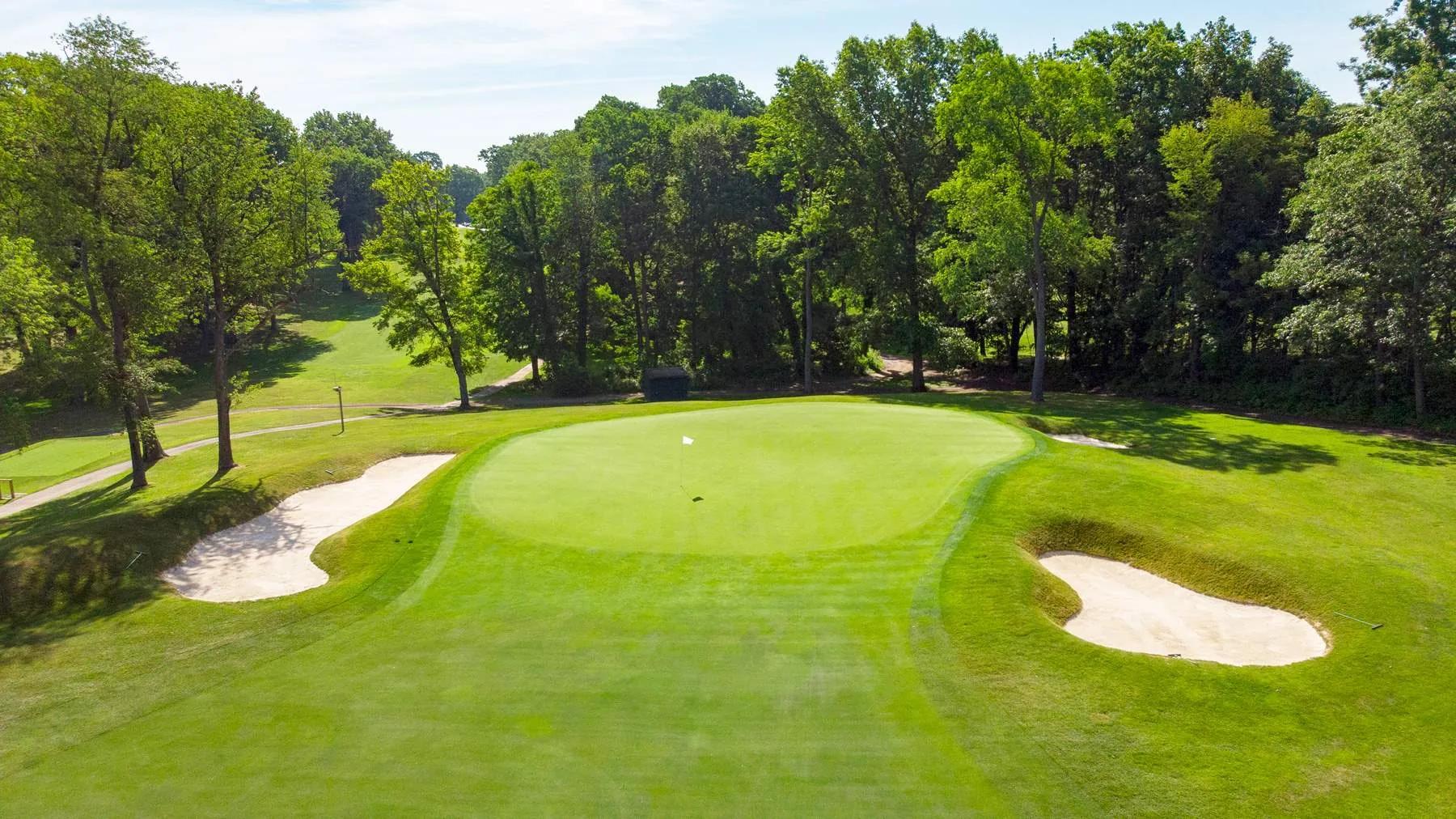
A private Donald Ross course on East Avenue beside Oak Hill, kept true to its design.
Donald Ross · Pittsford
Oak Hill Country Club — East Course
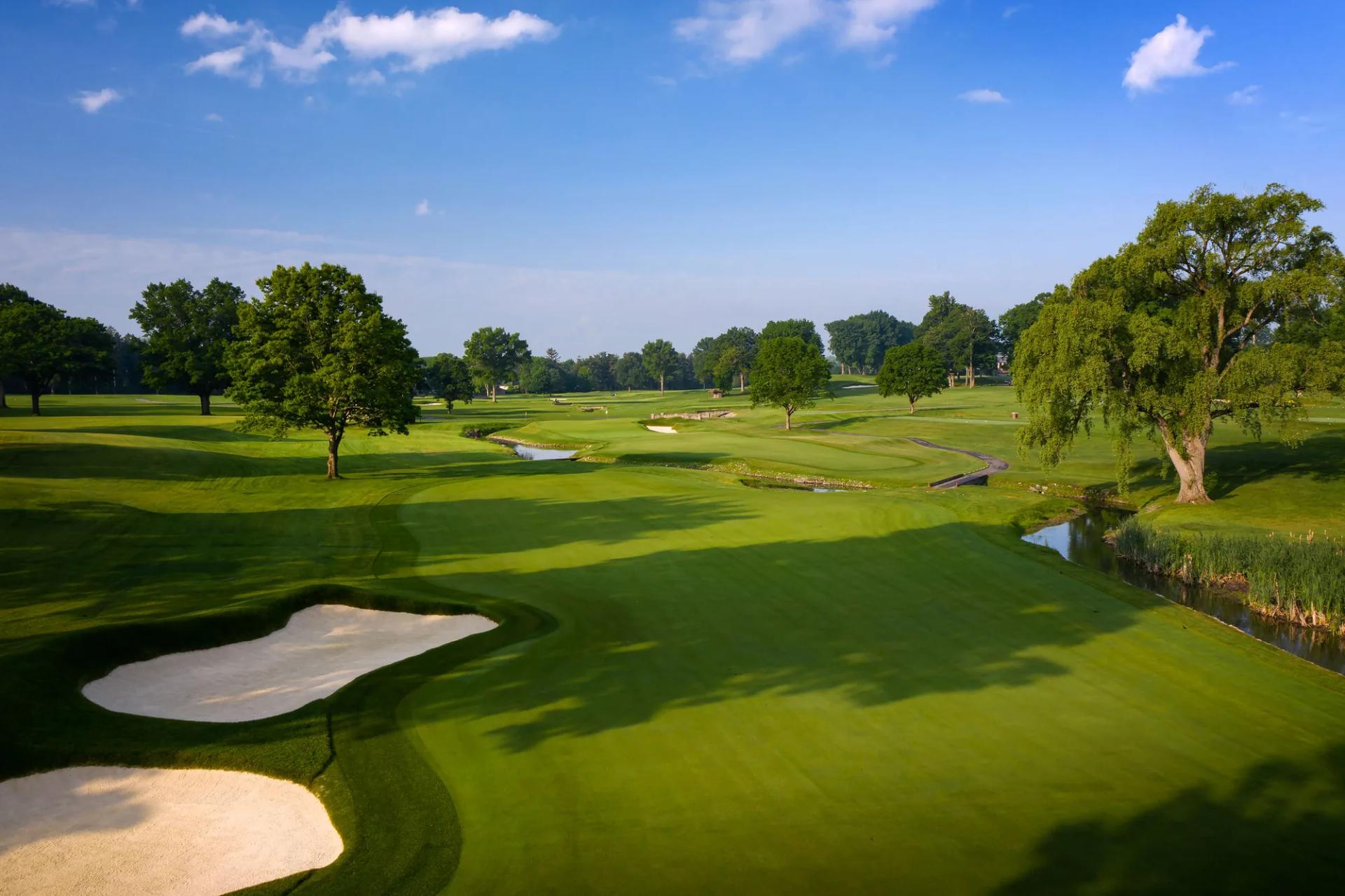
Donald Ross's major-championship East Course at Oak Hill, restored by Andrew Green in 2019.
Donald Ross · Pittsford
Oak Hill Country Club — West Course
Oak Hill's second Donald Ross course, little changed since 1926 and shorter than the East.
How to Play It
How to Play Locust Hill Country Club.
Locust Hill Country Club is a private club — play is reserved for members and their guests, with no public tee sheet. The only way on is a membership or a member's invitation.
Golf in NY is an independent guide — we don’t sell tee times or mark them up. We map the exact way on.