Invitation & Access · Long Island: Nassau
Inwood Country ClubInwood
A 1901 Jamaica Bay club in Inwood where Bobby Jones won the 1923 U.S. Open.
Par
72
Yardage
6,366
Rating · Slope
71.3 · 131
Holes
18
Green Fee
Members only
The Course
About Inwood Country Club
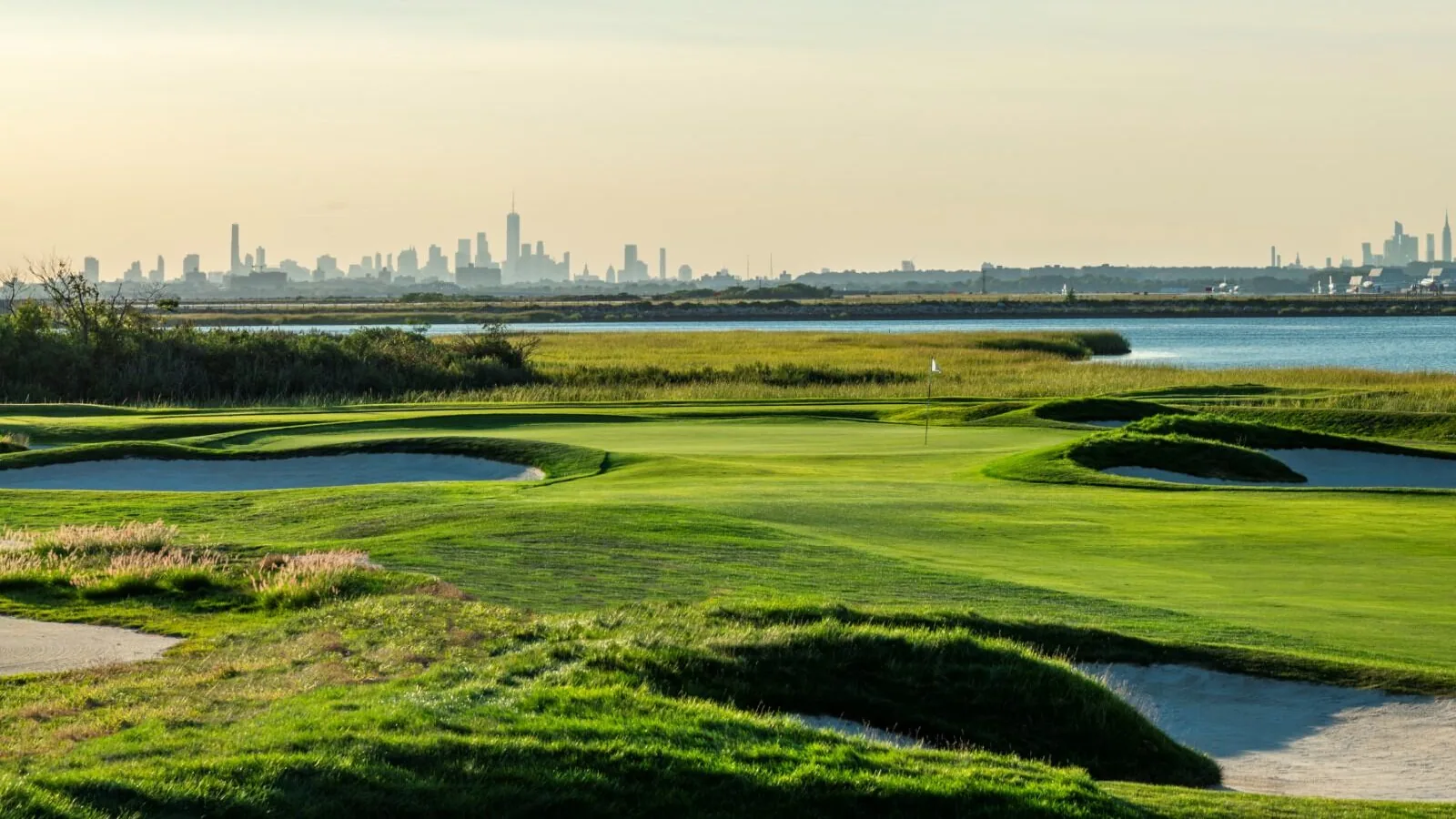
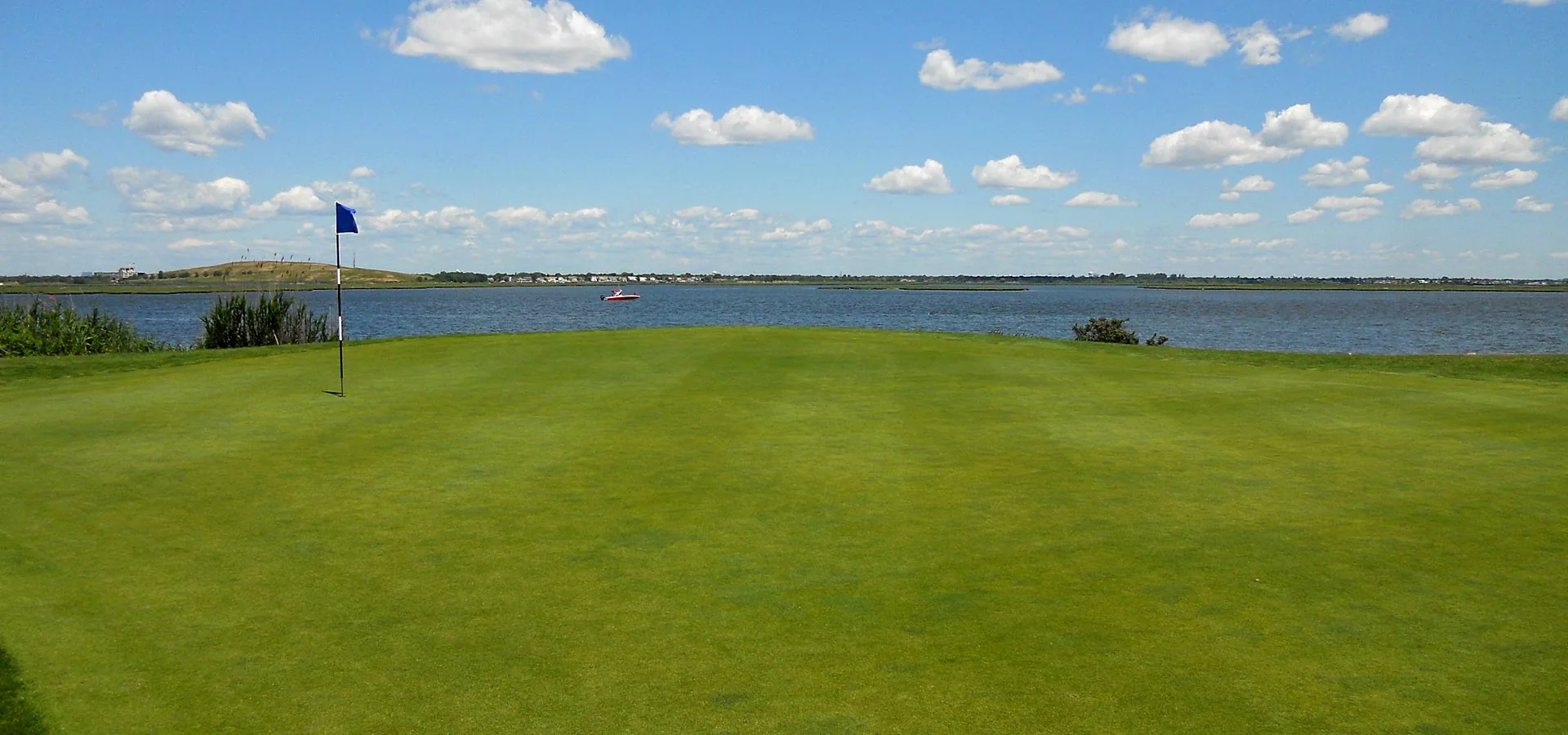
Inwood is a private club for members and their guests on Jamaica Bay, about 20 miles from Manhattan, with views of the city skyline and of JFK Airport. Wetlands border 11 holes and can be seen from all 18, and the course has been steadily returned toward firmer, more natural conditions. Golfers take a caddie or a cart, and the club also runs its own beach club on the Atlantic.
History
Inwood Country Club — History
Dr. William Exton and Arthur Thatcher laid out nine holes in 1901, and Edward Eriksen expanded the course to 18 in 1906. Herbert Strong, hired as professional in 1912, redesigned it into the routing largely seen today, and Jack Mackie added two holes along the wetlands in 1926. Walter Hagen won the 1921 PGA Championship here and Bobby Jones his first major, the 1923 U.S. Open. Tom Doak rebuilt the bunkers in 1997.
Design
Inwood Country Club — Design
Golf Course Architecture, in a piece by the club's greens chairman, describes a lowland course beside the bay that once played sandy, rough and firm. Decades of tree planting, long rough and heavy watering softened it, and since 2004, with consulting architect Brian Slawnik of Renaissance Golf Design, the club has removed trees, restored fairway lines and green sizes, swapped asphalt paths for sandy ones and returned to firmer turf that favors the ground game.
What Sets It Apart
Why Play Inwood Country Club
Inwood staged two majors in three years on this site, the 1921 PGA Championship and the 1923 U.S. Open, and a plaque on the 18th marks the spot of Jones's winning playoff shot.
The Round
The Journey at Inwood Country Club
I.
The Opening
The White-tee card opens with two short par 4s, the 332-yard 1st and the 342-yard 2nd. Then come three par 5s in a row, an unusual run that LINKS Magazine points out: the 500-yard 3rd, the 527-yard 4th, which is the No. 1 handicap, and the 480-yard 5th. The 160-yard 6th begins a pair of par 3s.
II.
The Middle
The 207-yard 7th completes the back-to-back par 3s. The 396-yard 8th, the No. 3 handicap, and the 403-yard 9th close a front nine of 37. The 10th is a 96-yard par 3 behind a pond, where LINKS recounts Ben Hogan splashing a tee shot during a 1941 exhibition. The 418-yard 11th and the 437-yard 12th, the No. 2 handicap, are the longest par 4s on the card.
III.
The Finish
The 325-yard 13th is the shortest par 4. Tom Doak's removal of a line of trees along the bay shore opened the 140-yard 14th to a wide view of Jamaica Bay. The 465-yard 15th is the last par 5, followed by the 363-yard 16th and the 377-yard 17th. The 398-yard 18th carries the history: a plaque marks where Jones played his 1923 playoff approach over the lagoon in front of the green, finishing six feet from the hole.
How to Play It
Inwood Country Club — Playing Strategy
Beginner / High Handicap
From the White tees Inwood rates 71.3 with a 131 slope over 6,366 yards. The club's restoration has aimed for firmer turf, so expect the ball to run and land short of greens where the ground allows. Settle in on the 332-yard 1st and 342-yard 2nd, and over the par-5 3rd, 4th and 5th, play for steady scores rather than forcing distance.
Intermediate / Mid Handicap
The par 5s come early and are the scoring holes, especially the 480-yard 5th and the 465-yard 15th, the two shortest. Wetlands sit beside 11 holes, so on the longer par 4s at the 11th and 12th, give up a little distance to keep the ball dry. On the 96-yard 10th, take enough club to carry the pond in front.
Advanced / Low Handicap
With all four par 5s under 530 yards from the White tees, a good round at Inwood is built on the 3rd through the 5th and the 15th. The two hardest holes by handicap, the 4th and 12th, are where par holds its value. Firmer conditions reward the running approach the restoration set out to bring back, so judge the bounce as much as the carry.
Signature Holes
Inwood Country Club — Signature Holes
The Card
Inwood Country Club Scorecard
| Hole | 1 | 2 | 3 | 4 | 5 | 6 | 7 | 8 | 9 | Out | 10 | 11 | 12 | 13 | 14 | 15 | 16 | 17 | 18 | In | Total |
|---|---|---|---|---|---|---|---|---|---|---|---|---|---|---|---|---|---|---|---|---|---|
| Par | 4 | 4 | 5 | 5 | 5 | 3 | 3 | 4 | 4 | 37 | 3 | 4 | 4 | 4 | 3 | 5 | 4 | 4 | 4 | 35 | 72 |
| Yards | 332 | 342 | 500 | 527 | 480 | 160 | 207 | 396 | 403 | 3,347 | 96 | 418 | 437 | 325 | 140 | 465 | 363 | 377 | 398 | 3,019 | 6,366 |
| Handicap | 15 | 13 | 5 | 1 | 11 | 17 | 9 | 3 | 7 | — | 18 | 4 | 2 | 14 | 16 | 8 | 12 | 10 | 6 | — | — |
Good to Know
Inwood Country Club — questions answered
- How do I get on Inwood Country Club?
- Inwood Country Club is a private club — play is reserved for members and their guests. The only way on is a membership or a member's invitation; there is no public tee sheet.
- Who designed Inwood Country Club?
- Inwood Country Club was designed by Herbert Strong and opened in 1901.
- What is the par and yardage at Inwood Country Club?
- Inwood Country Club plays to a par of 72 over 6,366 yards from the championship tees, with a course rating of 71.3 and a slope of 131.
- Is Inwood Country Club public or private?
- Inwood Country Club is a private member club — not open to public play. Access is by membership or a member's invitation; there is no public tee sheet.
- Where is Inwood Country Club located?
- Inwood Country Club is located at 50 Peppe Drive., Inwood, NY 11096, in the Long Island: Nassau area of New York.
More in Long Island: Nassau
More golf courses in Long Island: Nassau
Devereux Emmet and A.W. Tillinghast, with Perry Maxwell · Lawrence
The Rockaway Hunting Club
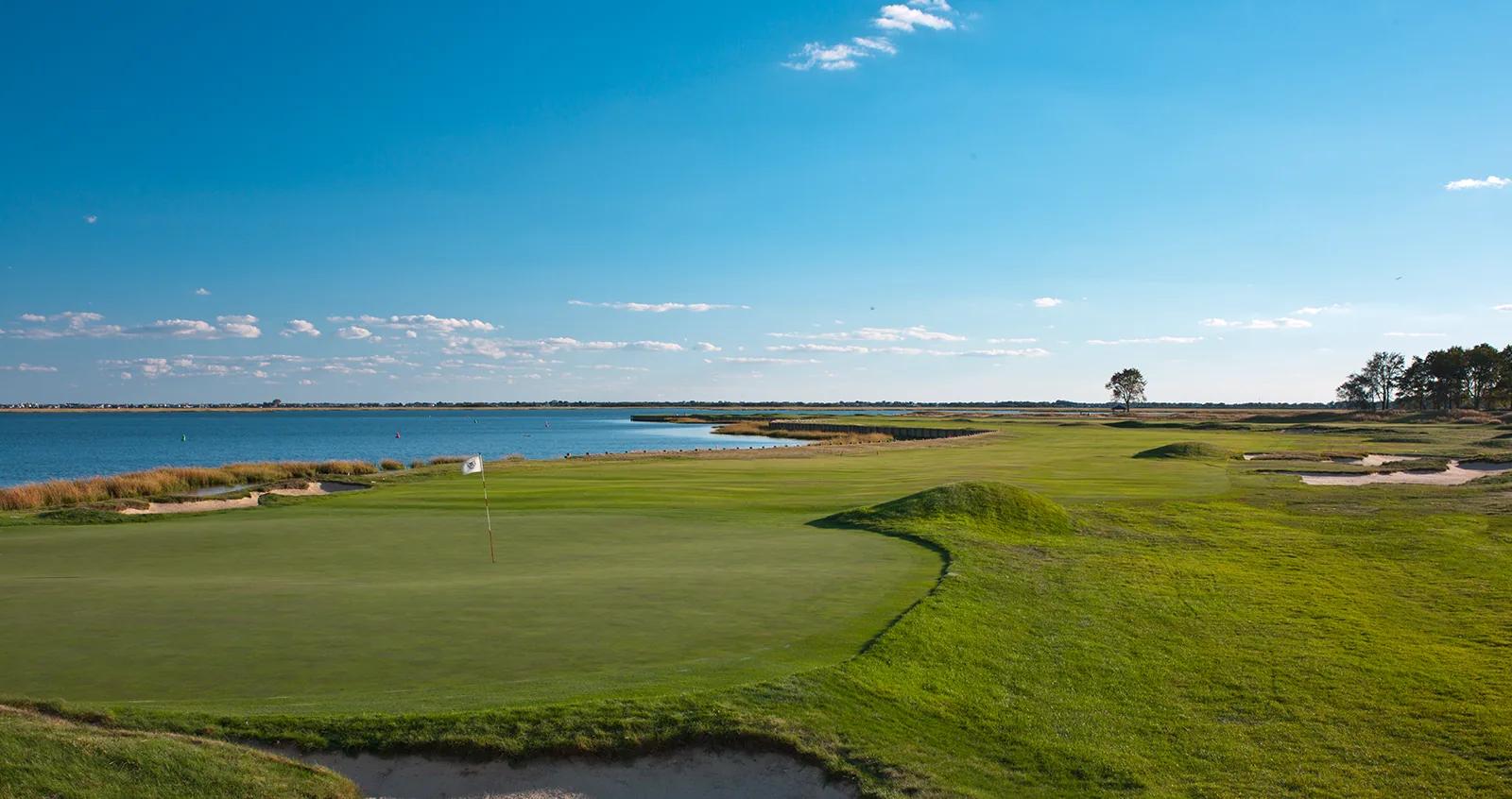
A walking links on Reynolds Channel at a Lawrence club founded in 1878.
Devereux Emmet · Hewlett Harbor
The Seawane Club
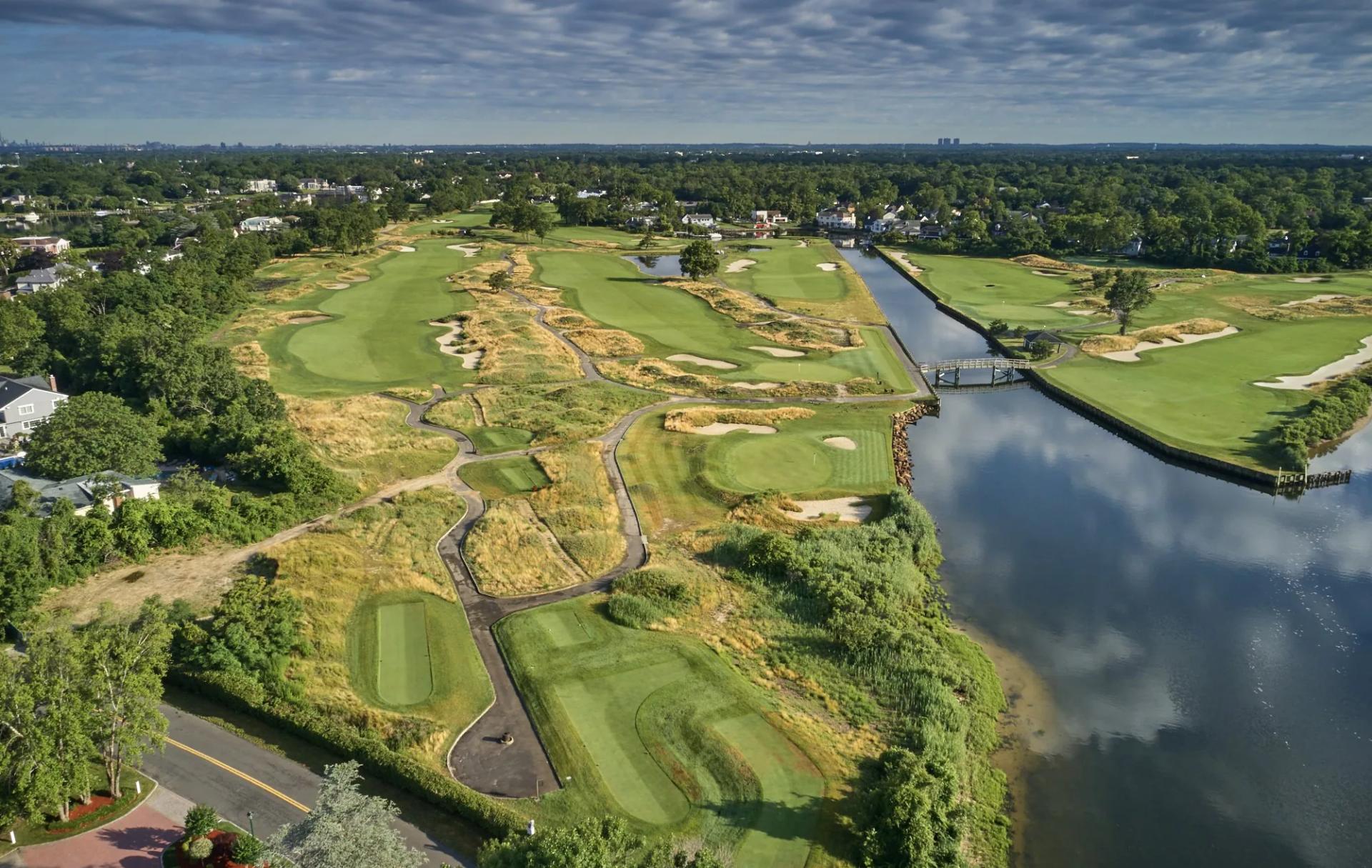
Emmet's links on reclaimed Hewlett Bay marsh, brought back to sand and fescue by Jeff Stein.
Robert Trent Jones Sr. · Lido Beach
Lido Golf Club
Seaside town golf at Lido Beach, where Robert Trent Jones replayed Macdonald's Channel Hole.
How to Play It
How to Play Inwood Country Club.
Inwood Country Club is a private club — play is reserved for members and their guests, with no public tee sheet. The only way on is a membership or a member's invitation.
Golf in NY is an independent guide — we don’t sell tee times or mark them up. We map the exact way on.
Make a Day of It
Dining & nightlife around your round.
Pair Inwood Country Club with New York City’s best dining and table service through MyRSVP — our sister guide to New York dining and nightlife.
Explore MyRSVP ↗